

By Melanie Slone
The County of San Diego Office of Labor Standards and Enforcement offers courses to help people know their rights and follow the law during immigration enforcement. Employers can request free training online or in person, at any venue and including language interpretation.
The most important point is to consult with legal counsel, says Mikey Knab, Business Outreach Manager with the County of San Diego Office of Labor Standards and Enforcement. His advice is summarized below.
Types of Enforcement
- I-9 audit: The government requires employers to have one on file for every employee, showing legal right to work in the United States.
- Notice of Inspection (NOI): The federal government is required to give employers at least 72-hours’ notice (three days) to respond and prepare materials for an I-9 audit. Employers are required to tell their employees within 72 hours of receiving an NOI.
- Workplace raids: Agents may show up at a place of employment alone or in a group, in different types of vehicles and outfits.
Responsibilities and Protections under the Law
- Employers should make and rehearse a plan, so everyone knows exactly what to do in case of enforcement actions.
- Fourth Amendment of the United States Constitution: Enforcement agents cannot force you to allow searches and cannot seize property without federal judicial warrants.
- Fifth Amendment: You have the right to remain silent. No one is obligated to share their immigration status or country of origin or how they entered the United States.
- California state law: The California Worker Protection Act (AB 450) prohibits what’s called voluntary consent to enter private areas of a business.
Types of Warrants
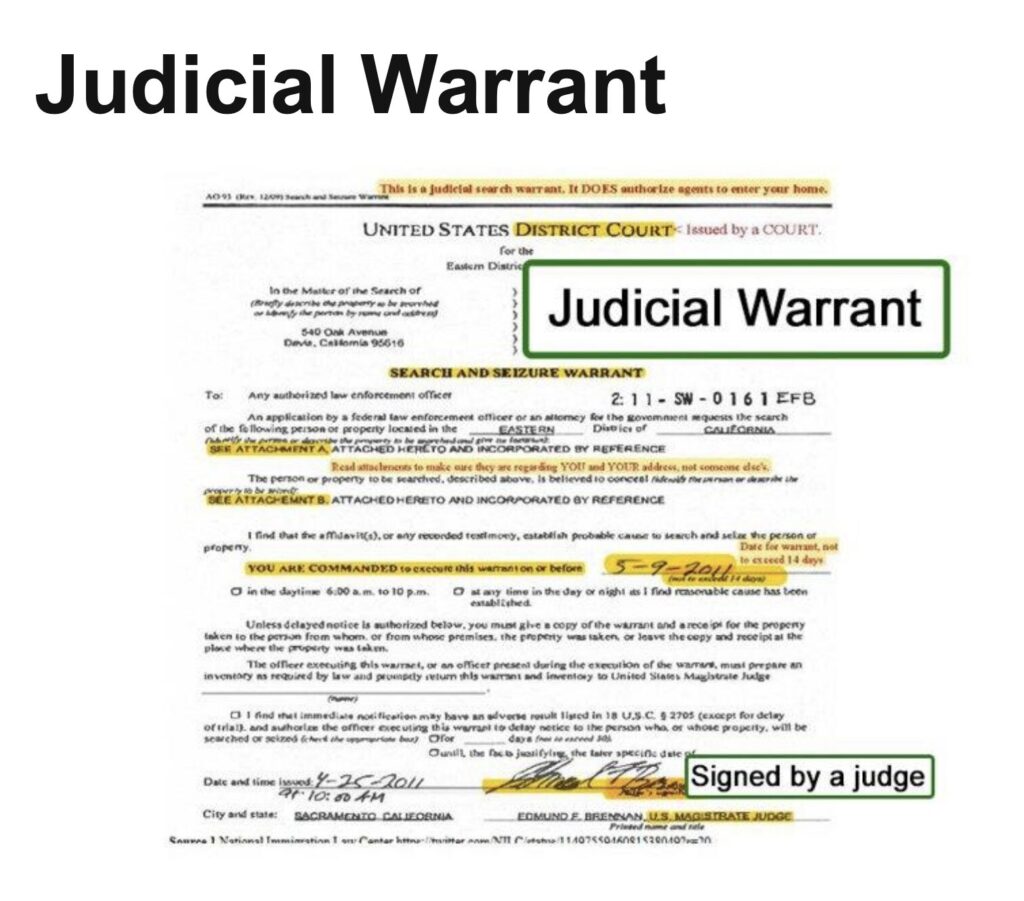
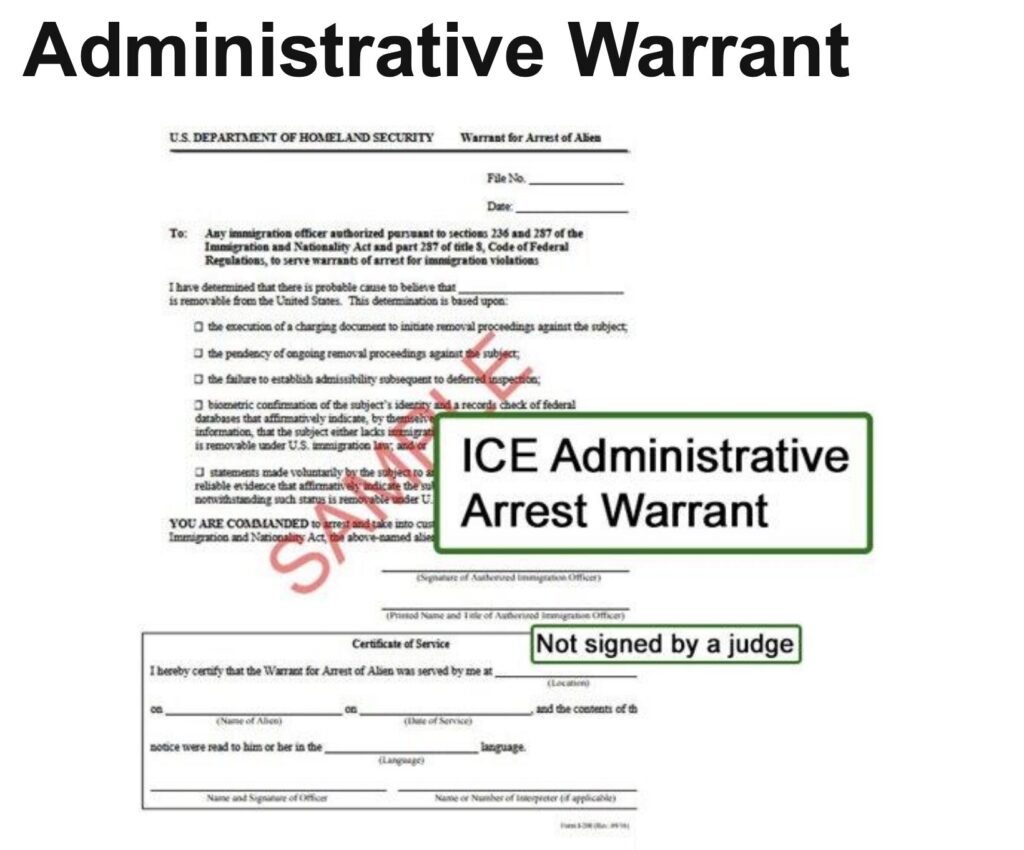
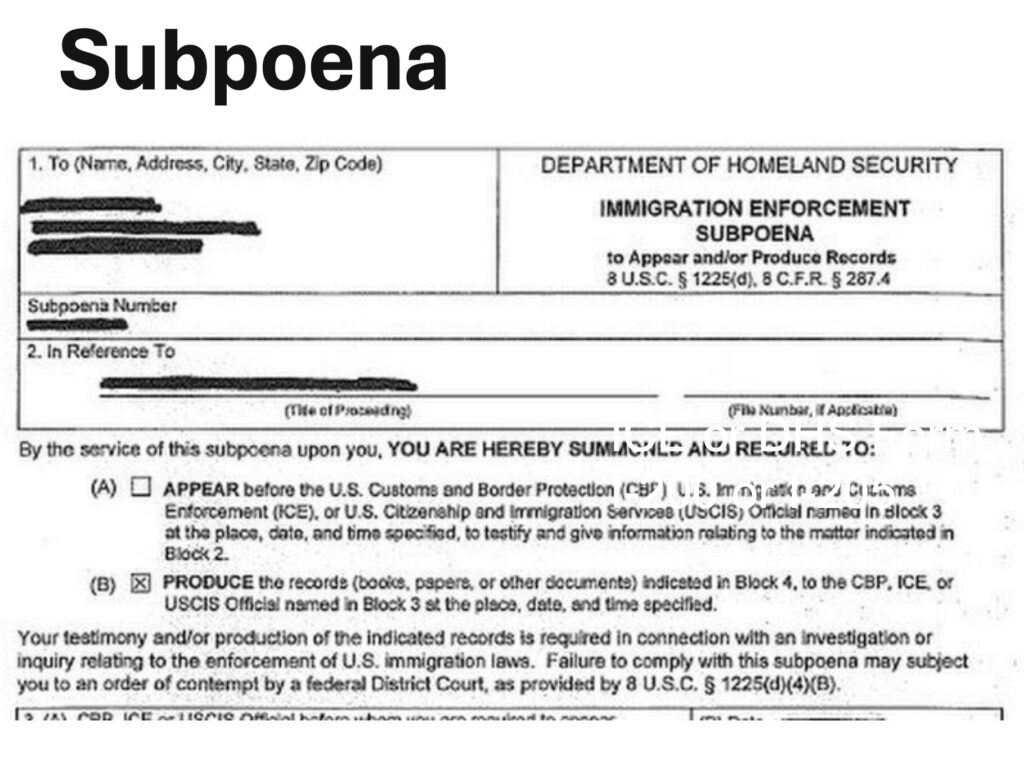
- Department of Homeland Security forms I-138 and ICE administrative warrants I-200, I-205 authorize arrest in public spaces, but do not grant the right to enter private spaces without consent.
- California’s Immigrant Worker Protection Act says employers are not allowed to give voluntary consent without the required judicial warrant (which is not an ICE warrant).
- Federal Judicial Warrant: Issued by a court, labeled federal arrest or search and seizure warrant. May authorize physical search or seizure, even in private spaces, without consent. It must be signed by a US Magistrate Judge from the US District Court, and include the name, address, city, state, and ZIP code of the person the agents are looking for. It must have a subpoena number, the date, and a reference to exactly what is under investigation.
Private Spaces
Private areas of your business must be clearly labeled PRIVATE in as many languages as possible. Keep all personal and identifying information about employers, employees, and clients in a private space or computer files (with passwords) marked PRIVATE. Public spaces include reception areas and spaces the public is allowed.
Safe and Legal Business Protections
- Designate 3 people for each shift, (1) a point of contact with legal immigration status to speak directly to the enforcement agents who knows the rights under the Constitution and California law; (2) someone to observe and document, preferably on camera, from a safe distance, and to get names, badge numbers, warrants, subpoenas, and other documentation from the agents; (3) someone to contact your lawyer. These should be three different people, and there should be backups for each.
- Prepare to help anyone who may have been detained. Devise a payment system for days worked (required by California state law); keep an emergency contact for each employee; prepare financial, legal, mental, health, childcare, and pet care resources, respecting confidentiality.
- List the basic fourth and fifth amendment rights and California State AB 450 in the employee workbook, break room, front desk, and company website.
- Do not allow ICE access to private areas without a judicial warrant because doing to violates state law.
How Employers and Coworkers Can Protect Employees while Following the Law
- Provide contacts and maps of community food resources, hold food drives, and learn about neighborhood and community support systems.
- Be aware of who needs childcare. Resources can be posted at the workplace and online or in emails to help maintain confidentiality for anyone who may need them.
- Post the phone numbers or other contact information of immigration services.
- Post information in break rooms or online in different languages explaining that privacy is protected.


