
By Melanie Slone
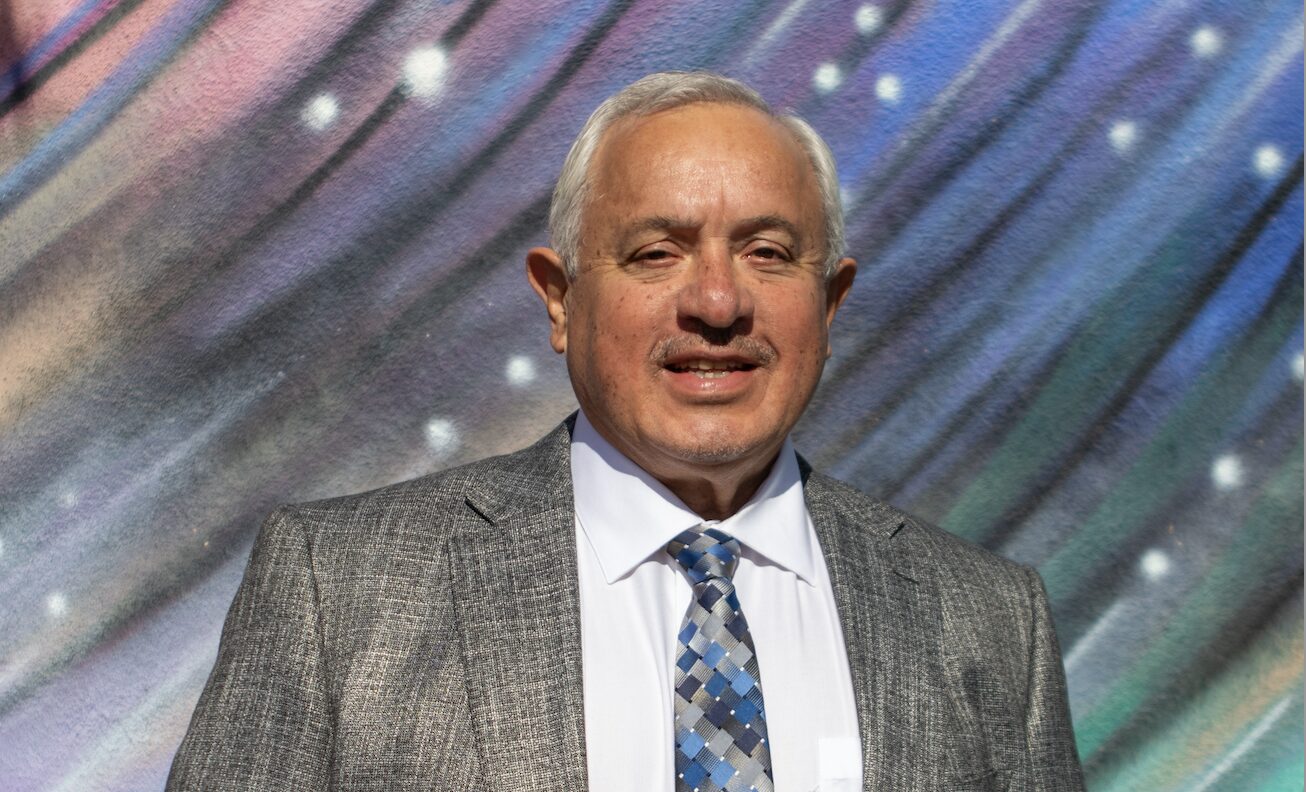
Half of the kids attending school in San Diego County do not have basic reading skills, and Latino and Black children are the most affected, says Jose Cruz.
As the chief executive officer of the San Diego Council on Literacy, he is fighting to change these statistics.
A Child Poet
Jose, who is also the co-host of The Gap Minders, a podcast about quality of life in the San Diego region, grew up in the southeast area, near what today is called Logan Heights. He is the only one of 10 siblings to go to college.
Although the family never lacked for anything, his parents spent long hours working, and his sisters were charged with raising the other kids. “My dad was a broiler chef, and my mother pressed shirts,” he remembers.
“We were a family living on staples, a 50-lb. bag of beans, a 50-lb. bag of rice, a big box of Corn Flakes, bologna sandwiches,” he says. “I think that’s how my parents were able to afford 10 kids.”
Jose always enjoyed reading and by the fourth grade, took in the joys of writing poetry. “My teachers really supported me in that; they made a big deal out of it,” he says, proving the power of mentorship.

Then, when it was time for him to go to junior high, his father decided to have him bussed to a different school. “The opportunity was there in another community…Maybe I ended up in higher math or was on a college track, like we say today.” He eventually wrote for the high school paper, which he says gave him a little “celebrity” and helped him learn to be a leader.
Still, there was no expectation—or money—for him to go to college. “I graduated from high school with a straight-C average. I enjoyed reading, I enjoyed writing, but I didn’t want to work hard,” he says. “I didn’t really have big plans except I wanted to keep writing.”
He considers himself fortunate that San Diego City College allowed him to enroll and finish AA degrees in English and sociology. Then, he earned a scholarship for a BA in English at University of Southern California (USC).
That degree led him to a teaching credential at San Diego State University, but he only taught for a short time, getting involved early in adult literacy efforts.
Literacy for All
In 1985, Jose started in literacy. He has worked for the Southern California Library Literacy Network and as the president of the National Alliance of Urban Literacy Coalition, besides his 34 years with the San Diego Council on Literacy. “That’s been my career, organizing people around literacy efforts on a regional basis,” he says, “with the theme of coalition building, bringing people together, inviting people into the effort.”
Today, the San Diego Council on Literacy has 35 affiliated programs. Jose works uniting organizations to “generate resources to support people who are providing direct services,” getting books into people’s hands.
Jose was the first paid employee of the San Diego Council on Literacy, which will celebrate its 40th anniversary on May 1.
Although Jose’s mother spoke Spanish, he did not learn the language well. The frustration he experienced helped him understand the importance of language. “Writing is a big deal, being precise, having the words to communicate your ideas, your thoughts…being understood and also understanding other people.” It’s one of the reasons literacy is so important to him.
“Having, I would call it a barrier, and it’s a shame not to be more fluent in Spanish… I think I make up for it by doing literacy work.”
Literacy Work
“Much of the work we do is really about relationship building, partnerships, communicating to people the importance of literacy to our community, the extent of illiteracy,” says Jose. “People are always surprised. The numbers are outrageous. I still don’t understand why we don’t have more outrage about what’s taking place with our kids.”
That’s the most important point. “We’re saving children. They’re not going to be behind their whole life, catching up their whole lives,” he says. Literacy allows people to be successful in school, pursue a career, read the books they want to read, and find the answers they want to find.
The Council has made an agreement with Data Science Alliance to measure more accurately the literacy rates in different areas of San Diego County, usually by ZIP code, and get more resources to the people who need them.
“Many adults in Oceanside read somewhere around the 4th or 5th grade level or below,” says Jose. And in certain North County ZIP codes, about one-fourth of adults are at the lowest literacy level (Escondido 92025, 27.14%; Vista 92083, 24.55%; Oceanside 92054, 23.33%).
“Look around, and you see words. Those of us who can read maybe don’t even remember not knowing how to read. I don’t know that we take it for granted, but we certainly enjoy the benefits of it. Imagine being on the other side of that, where you’re always having to ask friends for help and you struggle and are limited in what you’re doing in your life,” says Jose.
Home is Where the Book Is
“The parent is a child’s first teacher. The home is a child’s first school,” says Jose. “If you have the ability and the resources, you can have a child going into kindergarten who already has a foundation to be a good reader.”
When parents spend just half an hour a day reading to or with their children, these children show amazing literacy growth and do much better in school.
The advice is to have books in the home, says Jose, but “that doesn’t happen in a lot of homes. It didn’t happen in mine.”
That’s where the San Diego Council on Literacy steps in. “There’s help out there,” says Jose. “A lot of it it’s free, it’s in their community.” The Council has a network of 35 youth, adult, and family literacy programs.
“In the past 7–8 years we have given out about 550,000 brand new books for children, over $5 million worth of books,” says Jose.
The Council also works with the Imagination Library, where books are mailed to homes with kids under 5.
Spanish Is not a Barrier
Some parents are literate in Spanish, says Jose. “When people can read in their primary language, that is a strength and a foundation for literacy in English, the language that they need to function with here in the US.”
The Council just gave out through its partners 70,000 new books in Spanish from Fondo de Cultura Económica, 40,000 of which were for children. “Those books are being read,” he says, “and those books are helping people with not just reading in Spanish but reading in English.”
What Can You Do
If you would like to get involved in literacy efforts, or if you need books for your home, you can contact any of the partner organizations listed below. You can also volunteer to be a tutor and read to kids through one of the programs or give out free books.
Jose says many low-income children in San Diego County have no books in the home. A book drive can make sure they get some.
Another option is to donate to a literacy program or volunteer with an agency. “There are so many agencies out there that need help, so many who would welcome young people who are passionate about contributing to the community, making a difference,” says Jose. Plus, “for a lot of folks, that is how you get in the door. That’s how you find out what you like, and that’s where you get the experience,” he adds.
Jose is excited that more people are now focused on literacy. “We used to talk about adult illiteracy being America’s best kept secret, and that’s been put out there in the public now. Back when I started in 1985, there were just five literacy programs in San Diego; now there are 35.”
San Diego Council on Literacy Partners in the North County · Socios en el norte del condado
Captain Book Literacy Program : (760) 450-7181
Carlsbad City Library: (442) 339-2878
Education Begins in the Home: (760) 681-9950
Escondido Public Library: (760) 839-5440
MiraCosta College: (760) 795-8701
Oceanside READS: (760) 435-5680
Palomar College: (760)-744-1150, x2166
Words Alive!: (858) 274-9673