
By Beatriz Palmer
North San Diego County is home to a powerful higher-education triad: Cal State San Marcos, Palomar College, and MiraCosta College. Together, they enroll more undergraduates than 10 individual U.S. states, with Latino students comprising approximately 52%, 52%, and 43% of their respective student populations. All three are federally designated Hispanic-Serving Institutions (HSIs), which brings a responsibility to move beyond enrolling Latino students toward what HSI scholar Dr. Gina Garcia calls “servingness”—creating culturally affirming institutions that prepare students to succeed academically and beyond the classroom. Community partnerships can connect students to mentors, professional networks, and sustainable career pathways.
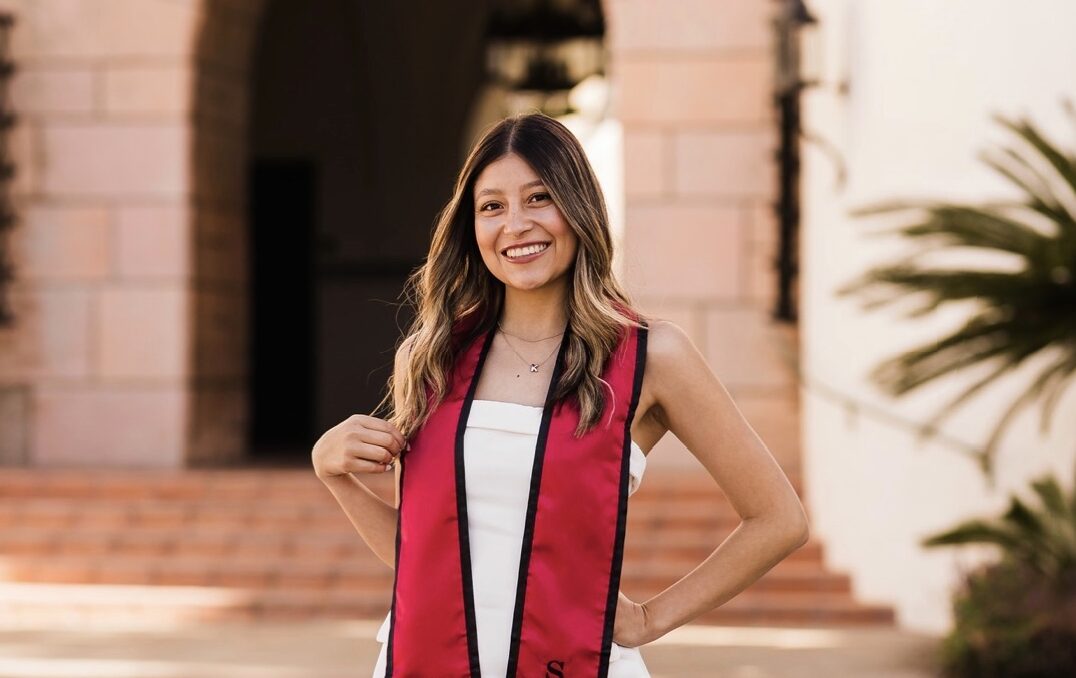
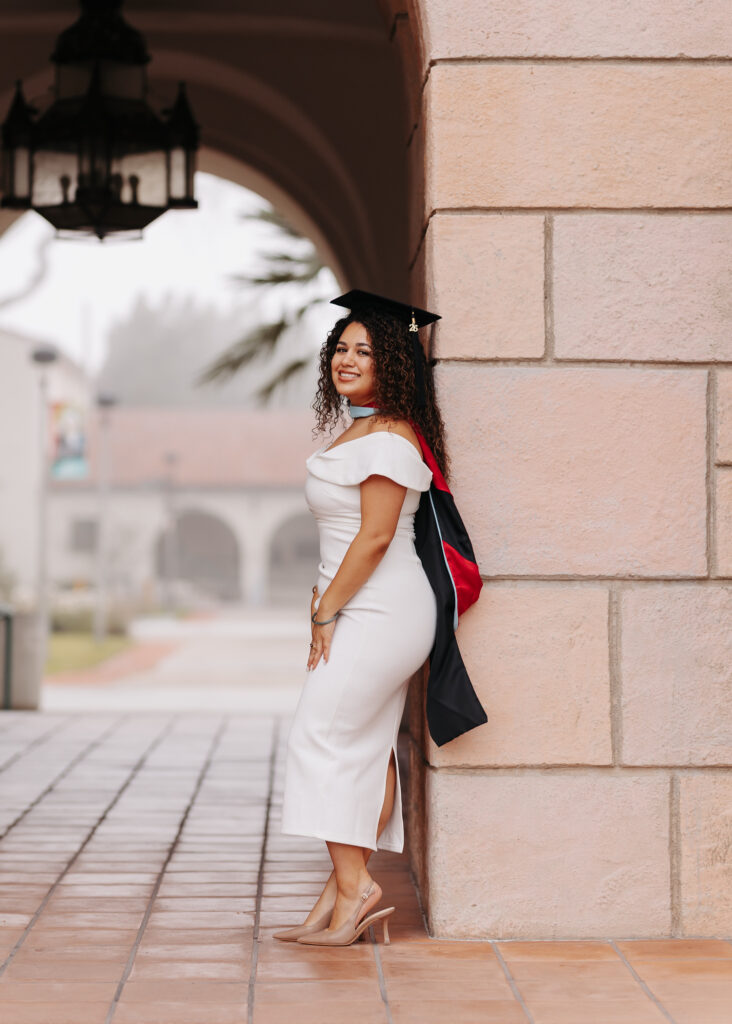
Tiani Kayleen Palmer and Kayla Cazares bring this responsibility to life. Both come from immigrant family histories, and their fathers served in the military. Although neither is technically categorized as first-generation, their parents returned to college as adults while raising families. Consequently, both navigated many educational decisions much like first-generation students.
Tiani’s grandparents were farmworkers, and she remembers hearing stories of her grandmother working in the fields and cleaning offices while raising children and grandchildren. “I recall her telling me to go to school so I wouldn’t have to work labor-intensive work for low wages like her,” Tiani shared.
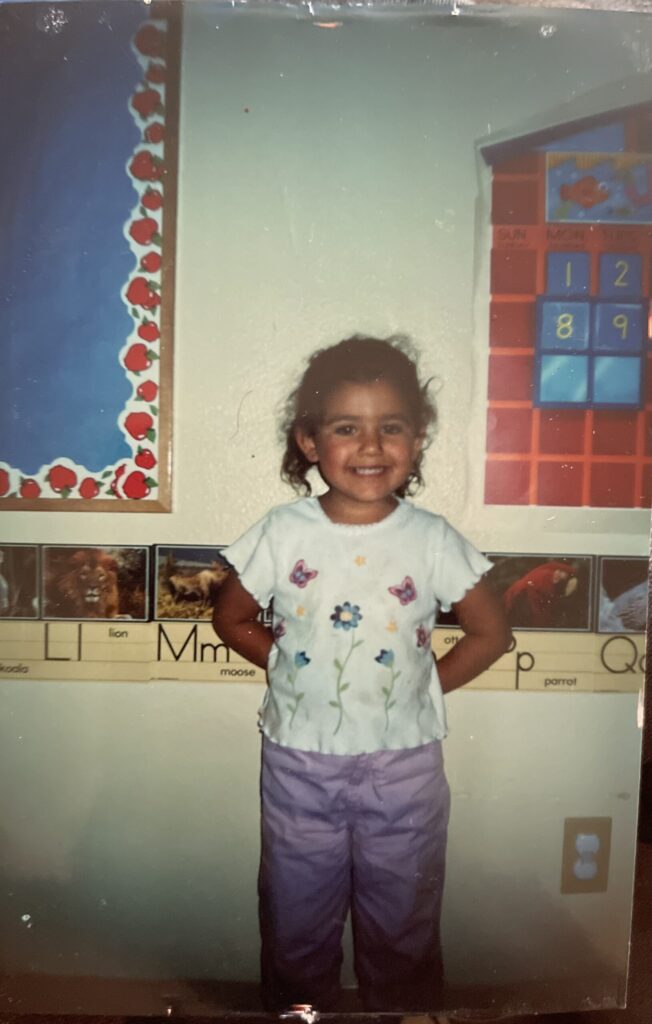
After graduating from Vista High School, Tiani attended a community college, where counselors helped her build confidence, navigate the transfer process, and believe she belonged in higher education. A mentor also encouraged her to visit UC Berkeley—the campus she would later attend. Tiani earned a bachelor’s degree in sociology from UC Berkeley and a master’s degree in school counseling with a Pupil Personnel Services credential from San Diego State University. She was recently hired as a school counselor with Oceanside Unified School District.
In K–12, Tiani does not remember having a Latino teacher or seeing her Black and Latina identity reflected in her classroom. “I needed to see myself and my family represented in the stories and narratives I was learning about,” she said. “It wasn’t until college that I became curious about learning and fell in love with learning.”
Kayla earned her bachelor’s degree in public health from San Diego State University and is pursuing a Master of Public Health at UC San Diego. Her experiences within several regional health systems helped shape her goal of becoming a doctor who addresses health disparities and works directly with patients.

Because Kayla remembers limited Latino representation among her educators, she became an SDSU Ambassador and Peer Ambassador Mentor, helping other students navigate college. “I wanted to be the person I would have appreciated having,” she shared.
Kayla also sees education as central to health care. As a future doctor, she hopes to help patients and families understand and access the care they need while becoming someone younger Latino students can look to and think, “I can do this too.”
Their stories show why meeting students where they are matters. Many navigate uncharted waters such as financial aid applications and career planning while managing tuition, unpaid training hours, employment, and family responsibilities.
Tiani believes Latino students want to become credentialed teachers and counselors, but those pathways are not always financially attainable. “A school-counseling credential can require 900 fieldwork hours, not including preparation, materials, and other unpaid labor,” she says. Students pursuing teaching, medicine, and other health professions face similar demands. For those working multiple jobs or supporting families, the caminito can feel out of reach.
North County’s colleges and universities can strengthen the bridge between K–12 education and meaningful careers through paid internships, stipends, scholarships, and service and experiential learning. Working alongside schools, health centers, and community organizations allows students to apply course content while building résumés, professional networks, and social capital. These pathways are especially urgent where the gap between Latino students and credentialed Latino teachers remains critically alarming.
Tiani and Kayla remind us that representation is more than seeing someone who looks like you. It is seeing a possibility, receiving support to pursue it, and returning to your community to become that possibility for someone else. That is how higher education becomes a pathway to economic mobility and community transformation.