

By Elaine Camuso, Director of Communications, Wakeland Housing
No matter your age, there’s nothing quite like having a home of your own. Being in charge of decor, keeping your space clean on your own schedule, and creating a space that’s entirely yours feels incredible. For older adults, the opportunity to live independently can have widespread benefits for well-being and quality of life.
Sometimes, living alone in a larger space can have downsides. While independence is maintained, a larger living space can quickly become a cluttered and stressful environment for seniors aging in place. That’s why a minimalist approach to living, while not for everyone, may be a better option for some older adults. Here are 5 reasons why North County seniors might consider embracing a simpler lifestyle.
- Less Clutter Reduces Stress
Physical clutter is, in many ways, unavoidable. Daily living in one space creates clutter—mail left by the door, dishes in the sink, or unfolded laundry strewn across furniture. Larger spaces can make it easier to disperse clutter across a home and ultimately ignore messes. It’s much harder to ignore clutter in smaller spaces, thus forcing residents to declutter more actively. Medical professionals agree that untidy environments increase stress in most people.
- Smaller Spaces Require Less Maintenance, Creating More Free Time
It may sound simple, but it’s undeniable—smaller, more minimalistic homes require less cleaning and overall maintenance, giving residents more time to do the things that make them happy. For seniors, it could be more time visiting family, enjoying a favorite hobby, trying out a new recipe in the kitchen, or connecting with friends.
- Minimalistic Homes Are Safer and More Accessible
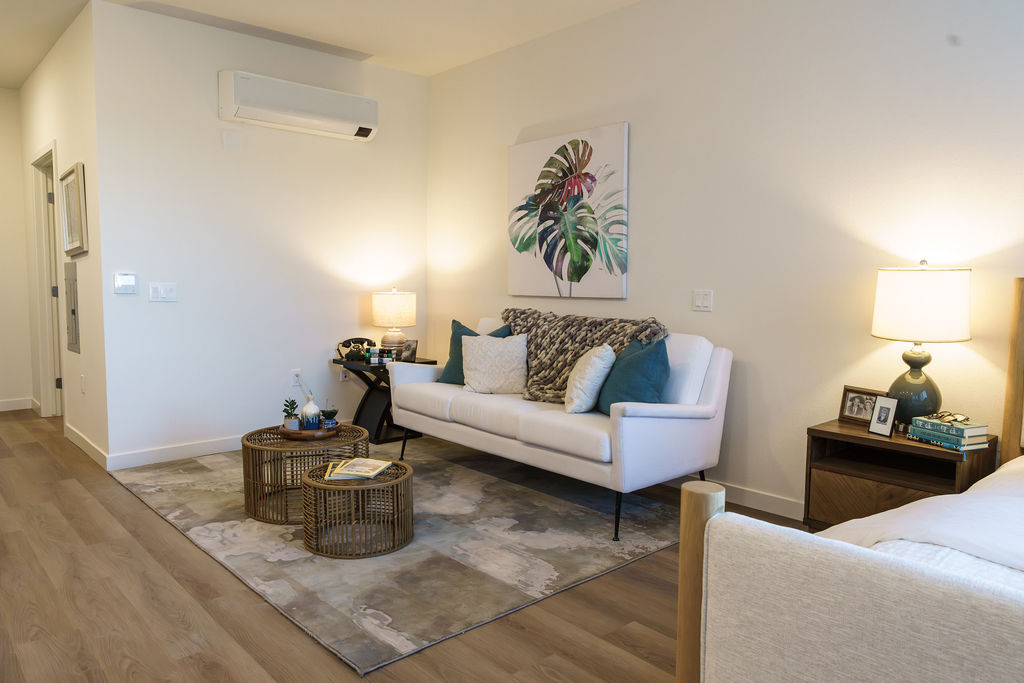
When there are fewer things in your home, it is easier to get around. It is especially important for seniors with mobility concerns, who may struggle to get around larger spaces and are at risk for potentially devastating falls. Simpler layouts with minimal furniture don’t just present a clean aesthetic; they reduce the risk of injury.
- Downsizing and Embracing Minimalism Reduces Financial Burdens
Smaller spaces require less furniture, maintenance, and utilities, resulting in thousands of dollars in savings every year. BecomingMinimalist.com shows that smaller living spaces reduce residential utility costs by 25%, maintenance costs by 10%, and renters’ insurance costs by 20%, resulting in an estimated $2,700 in annual savings.
- Senior-Friendly Communities Fight Isolation
Living in smaller, more minimalist homes in senior-only neighborhoods, such as the new units at La Sábila Apartments near Vista, can offer a balance between independence and community. Having personal space helps maintain self-sufficiency, while living among other seniors may foster social connection and reduce feelings of isolation.
For older adults, the advantages of a simpler, more intentional lifestyle can be significant—creating more free time, a safer home, and improved social connections