
TrueCare’s Family Therapist and Trauma Clinician Integrates Primary and Behavioral Health
By Melanie Slone
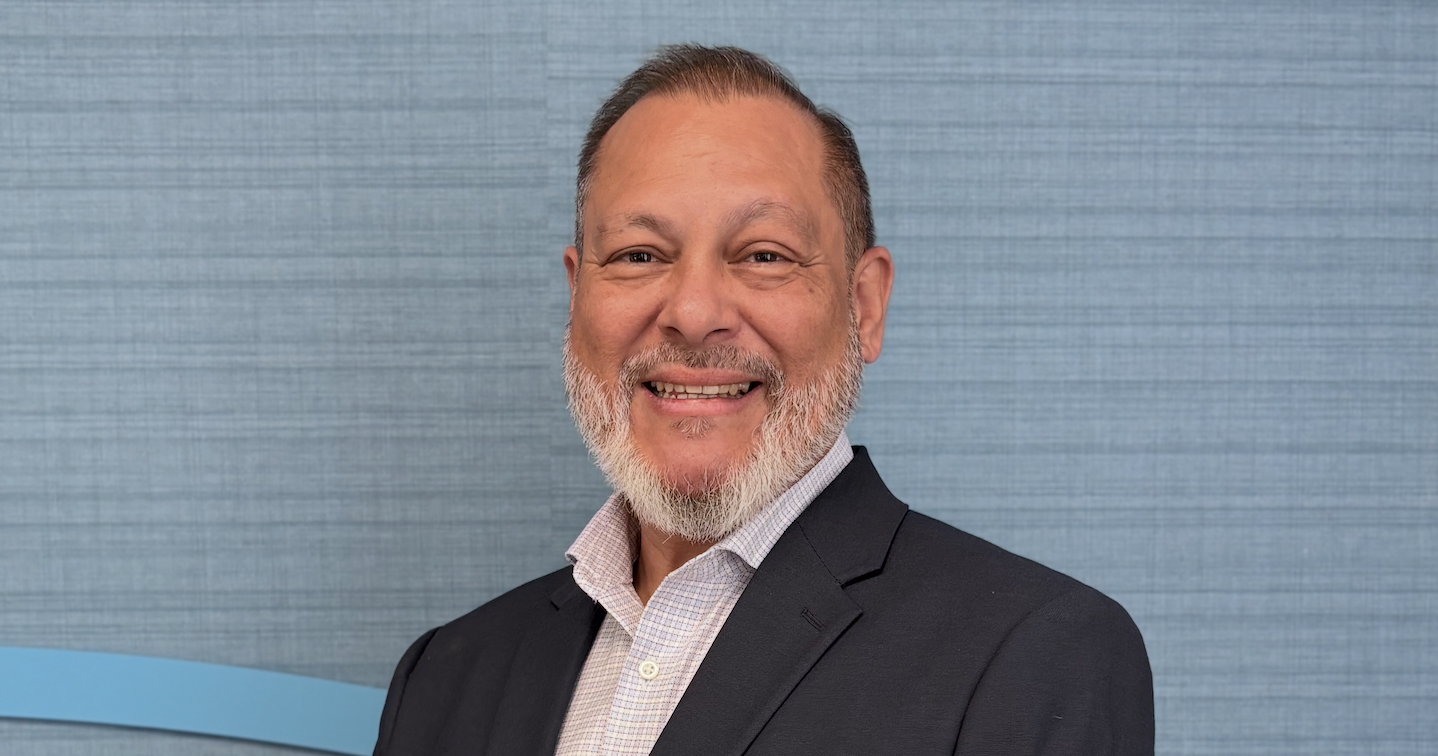
“Mental health care is not about being ‘crazy’,” says Dr. Leon Altamirano, PsyD, Director of Integrated Behavioral Health at TrueCare. “There is nothing going on in TrueCare or any of the other places that provide mental health services that has anything to do with being crazy. It really is about healing from the traumatic experiences we’ve all had.”
Immigrant families often share some of this trauma. Dr. Altamirano’s family hails from Nicaragua, and he was the first of his siblings born in the United States. “That was it was quite a change for both my parents and my siblings,” he says.
“It’s the identity thing, actually being able to feel like you belong…that identity challenge magnified by financial struggles, not really having so much money,” he says.” They kind of compounded each other.”
When he later visited Nicaragua, he came to understand who his parents were and where they had come from. Yet even today, Dr. Altamirano faces issues of identity. “Sometimes it crops up, and I just feel a little insecure. I think we all have that in some way, but it originates differently for everyone.”
Facing these challenges and many others makes up the backbone of the behavioral health Dr. Altamirano provides today.

Integrated Health Care
A licensed psychologist with a doctorate in Marital and Family Therapy from Alliant International University, Dr. Altamirano came to TrueCare after working as a consultant to integrate behavioral health into primary care with Native American groups throughout California and Arizona, as well as among inmate and immigrant populations.
“About 50% of people that die by suicide are seen in primary care within a month of attempting or actually dying by suicide, so that was kind of what pushed me into integrating and doing consulting for clinics.”
When the behavioral health consultant position opened at TrueCare in 2014, he saw they were looking for what he was training others to do. “At the time, there were just three of us in behavioral health,” he remembers. “Twelve years later, here we are with these fully integrated behavioral health program in primary care.”
He adds, “About 70% of people who are depressed, anxious, or experiencing any mental health symptoms go to primary care providers first…The majority of antidepressants are prescribed by primary care providers. It just made sense to team up and work to change primary care. It’s been practiced the same way for hundreds of years, and for TrueCare it’s about developing the primary care delivery system for the next 100 years and thinking forward.”
Dr. Altamirano heads the behavioral health teams, which are now integrated into the primary health setup. “When patients come in, they’ll talk to their provider about symptoms of depression, anxiety. Therapists or psychologists are available same day to screen patients. Every patient goes through us, through the integrated behavioral health teams, this single pathway process.” The team determines what patients need.
“The integrated behavioral health team does therapy, but we also manage crises,” he explains. “We do all the screenings to determine, can we even provide care, or do we need to help people get connected somewhere else in the community?”
Generational Trauma Therapy
A member of the San Diego Suicide Prevention Council since its inception, Dr. Altamirano focuses on making sure patients realize how trauma can severely affect their lives and biological health. “Dealing with generation after generation after generation of trauma within the American Indian communities was really the driving force,” he says. “It was such a bigger issue than just any one person, any one family within that community.”
He believes it is essential to treat the entire person, not merely patients’ physical symptoms but also the trauma that has led to the symptoms. “We’ve always treated the body, and the brain elsewhere, when we know now that especially child childhood trauma impacts the brain. As we get older, our internal systems start to falter. It’s all directly related to trauma and what it does to the brain,” he explains.
“Whole-person health is the most important change that we could make in healthcare. It brings along with it all kinds of prevention education and lots of teaching, not just our patients but also each other.” Dr. Altamirano has spent his entire career, both at TrueCare and elsewhere, teaching others about all medical disciplines so everyone can “see the pathway or the bridge to the other discipline, so patients don’t fall through the cracks.”
You Are Not Crazy

Dr. Altamirano believes a lack of health literacy is impacting many families, especially from underserved groups and rural and immigrant communities that lack education about mental health. “It’s a lack of health literacy, minimal understanding, minimal efforts in those areas to educate the community about the importance of behavioral health care.”
He has been doing research in trauma-related medicine throughout his career. “Mental health care is not about being ‘crazy’,” he says. “The more that we experienced in our childhood, the more problems we’re going to have later in life. It’s why our community has so many chronic medical conditions.”
He encourages everyone to get their whole selves examined. “Not just the medical condition, not just the organs, not just the bones and stuff. Make sure that you understand why you ended up this way to begin with, and that’s going to come easily if you talk to a therapist, a psychologist, somebody who’s trained to help you heal and clarify.”
Integrated care allows specialists the opportunity to provide education about all aspects of health, he says. “What happened to you when you were growing up?” he asks. “Helping them recognize and maybe even finally accept that it was pretty hard, it was very traumatic.”
Most of his patients, especially the Spanish-speaking ones, have never told anyone about the things they’ve experienced. “My patient population, Hispanic females over 50, I’d say about 75% of them never told anybody about rape, about physical abuse, about domestic violence, about all the things that they’ve experienced; the reasons why they ran away from home or the reasons they got married at such a young age was to get away from that.”
He notes that mental health care means talking about the impact of these “horrifically traumatic experiences and how they’ve played out. It’s not that people are crazy… The demand for mental health care is because of trauma.”
Mentors and Pathways
Dr. Altamirano is grateful to his parents for setting the foundation for him. “It was encouragement in spite of everything else.”
He started his higher education at Los Angeles Valley College, a community college, where he was inspired by others. “I kept finding people to observe,” he says.
He urges others to find a mentor or even a therapist to get connected with the system. “Keep your eyes open and pay attention to the people around you, not only what they do but how they interact with the people they’re trying to serve,” he says. “Immerse yourself in the problems, immerse yourself in the challenges.”
When you find that person who is truly serving the community with passion, “take whatever they’re doing, however they’re speaking, to whomever, take a little bit of that with you and try to emulate that without being afraid,” he urges. “I think there are so many mentors out there who don’t even know they’re mentors…people that were able to find their way and become entrenched in their community.”
Dr. Altamirano believes community clinics like TrueCare are a magnet for these leaders. “There are places like TrueCare, jam packed with people like that in one organization.” He has flourished in these organizations that have female leadership, “probably the best organizations in my mind,” he says. “The goals, the mission, this package. You kind of take a bite of it, and it sits with you. It’s like coming home.”
TrueCare is a Federally Qualified Health Center (FQHC). “We are the safety net for the entire community,” says Dr. Altamirano. “If you don’t have insurance, if you have very little insurance, if your copays are really high, it doesn’t matter. We’re a safety net organization. If you can’t get help anywhere, get help with us. We work with people to make sure getting care doesn’t break the bank. We do our best to try to eliminate the barriers so people can get care and get better.”