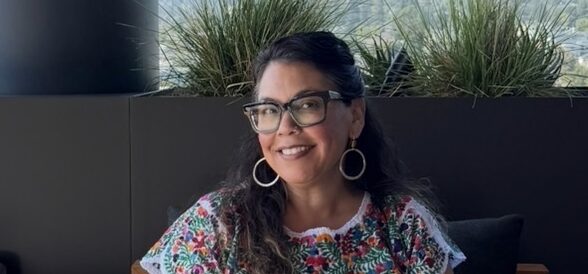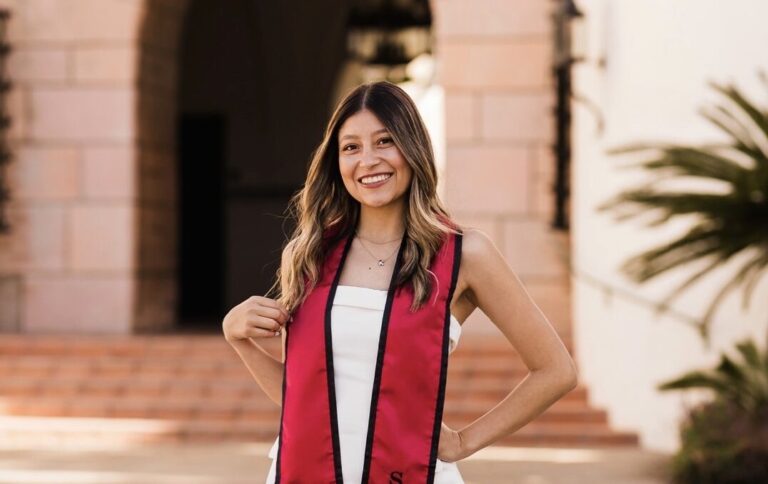

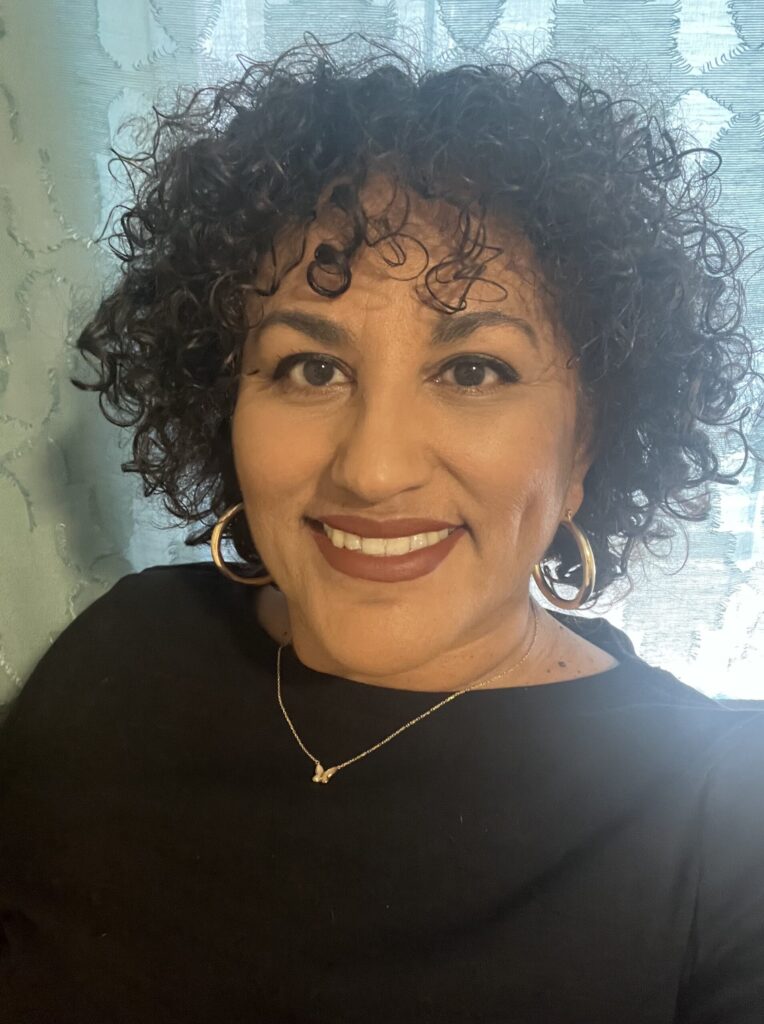
By Beatriz Palmer
Childcare and preschool centers are often a child’s first learning community outside of the home, and the quality of that experience matters. Child development experts and psychologists say the first five years of a child’s life are the most critical for brain and social-emotional development. All families deserve options that are affordable, high-quality and culturally centered—places that care for the whole child while also welcoming parents into the learning journey.
Giving a child a head start in developing a growing mind begins with a safe place to grow—and the freedom to be curious, explore the world around them, and learn alongside human beings who nurture that curiosity. As children grow, parents can grow too, becoming more confident in understanding their child’s development and in their role as their child’s first teacher and number one advocate. Here is where a cradle-to-career pathway can begin.
During the first five years, children are developing language and communication, creativity, confidence, problem solving, emotional regulation, empathy, and the ability to build relationships. What looks like children playing is really them actively learning through movement, exploration, art, pretending, asking questions over and over, making mistakes, and trying again. These are not simply kindergarten-readiness skills; they are the foundation for becoming lifelong learners.
For parents, choosing who will care for their child is deeply personal and stressful. They are often balancing three things: affordability, quality, and safety, and at the center of all three is trust. After all, a child might spend eight, nine, or even ten hours a day in someone else’s care, making that center more than a babysitter while the parents work. It becomes an extension of their home and, in many ways, their whole world.
Quality care includes nutrition, physical and emotional safety, play, outdoor exploration, social-emotional development, and relationships with safe adults. It means opportunities to develop friendships with their amiguitos, move their little bodies, use their imaginations, and simply be little while learning about the world around them.
Culture and language belong there, too. Children should hear familiar languages, stories, foods, traditions, art and music, and ways of being reflected in their learning environment. For bilingual and multilingual children, language connects them to mamá, papá, abuelita, extended family, and community. Children should not have to walk through the doors of preschool and leave part of themselves behind.
Quality programs also recognize that children do not develop separately from their families. Parents are their child’s first teachers, and meaningful family engagement helps them understand developmental milestones, ask questions, and build confidence advocating for their children as they enter the K–12 system. Wraparound services matter too. A family may need help navigating services or simply a trusted person who can say, “I can help you figure things out.”
For families raising multiple children, working more than one job, working weekends, navigating unfamiliar systems, attending college, trying to create greater economic mobility paired with affordable and reliable childcare can be transformational. It can allow a parent to remain employed, pursue a promotion, attend college, or complete job training while knowing their child is safe, cared for and learning.
There is also a broader economic return. Research on Head Start has found long-term improvements in educational attainment and economic self-sufficiency, including gains in high school completion and college enrollment and completion. More recent research examining publicly funded pre-K programs across multiple states and large cities estimated that every $1 spent generated roughly $4 in additional earnings overall, and about $13 for programs providing five or more hours of care per day. The exact return varies by program, but the message is powerful: early childhood education is not simply an expense; it is an investment in children, parents, the workforce, and our economy.
The people doing this work are also not simply babysitters. Child development teachers are educators. They complete college coursework in early childhood education and continue professional training throughout their careers. Early childhood education can become a pathway toward economic mobility, from assistant or associate teacher to teacher, site supervisor, center director, or administrator. Some educators continue their education and move into other areas of education, including K–12.
Here in North San Diego County, programs such as MAAC’s Head Start, Early Head Start and state-funded preschool programs, along with Growing Minds, show what this broader culture of care and connection can look like. Low income may be part of an eligibility requirement, but the quality should never be low. These programs can become part of a child’s circle of care and the beginning of a cradle-to-career pathway for an entire family.
Community Voices
Research gives us numbers and outcomes, but community voices tell us what those investments feel like in real life. The stories below reflect four different perspectives: a Head Start parent who became an early childhood educator, a college student and mother whose access to quality childcare helped her continue her education, a male child development educator with 15 years in the field, and a working single mother pursuing her degree while her daughter attends Head Start.
Azucena Razo: One Family, Two Generations Growing

Azucena Razo first entered MAAC as an Early Head Start parent. Her daughter entered MAAC as a baby through home-based services, later transitioned into center-based Head Start and, after nearly four years of early childhood education, is now thriving in Transitional Kindergarten.
While her daughter was growing, Azucena began a journey of her own. A MAAC family advocate asked her a simple question: What’s your goal? Azucena wanted a better job that did not require weekends and holidays and would allow her to spend more time with her daughter. That goal eventually connected her to MAAC’s state-registered Early Childhood Education Apprenticeship Program.
Azucena participated alongside her sister. She shared that they had not grown up particularly close, but going through the program together helped them develop a bond they both needed. The experience also gave Azucena space to look inward, heal parts of her own past, and understand how that healing could help prepare her to care for and teach other children. She learned the importance of goal setting, mentorship, and community; created her first résumé; returned to college; and began pursuing a career she had always wanted but did not know how to reach.
“I learned how important the first five years are for a child. I never really knew that all of those experiences were so important for them. Connection, love, and learning how to self-regulate are skills that they will carry with them for a very long time.”
Today, Azucena is an Associate Teacher with MAAC Child Development. She now has a schedule that gives her more time with her daughter while she continues her education and builds a career.
“If it wasn’t for the apprenticeship program, I wouldn’t have gone back to college. I always wanted to be a teacher, but I didn’t know how.”
Her journey with MAAC and Head Start provided her generational change and economic mobility happening.
Melissa Cuevas: Safety, Culture and the Space to Keep Growing

For Melissa Cuevas, a MiraCosta College student and mother, quality childcare gave her the peace of mind she needed to continue pursuing her own goals. When Melissa looked for care, she wanted more than physical safety. She wanted caring and patient teachers who treated her children with respect, understood what was happening with them throughout the day, and communicated with her as their parent.
“What mattered most to me was finding a place where my children would be safe, cared for, and treated with respect.”
Culture and belonging were equally important. Melissa wanted her children to feel proud of who they are and to be in an environment where their family and cultural background were acknowledged and respected. Her children attended Mini Miracles and are now enrolled at High Tech North County Elementary.
Access to quality childcare also created room for Melissa’s own growth. It allowed her to work, continue her education, and manage the responsibilities of raising her family while knowing her children were safe and developing.
“Quality daycare gave me the opportunity to work on my goals, continue my education, and take care of responsibilities while knowing my children were safe.”
Her story reminds us that the return on quality childcare is not only what happens inside the classroom. Sometimes its impact is also measured by what a parent is able to pursue because they know their children are in good hands.
Cassandra Castaño: Close to Home, Free to Be Himself

For Cassandra, choosing a Transitional Kindergarten program was about finding an option that made sense for her family while also giving her son a strong and secure beginning in school. Two practical considerations mattered immediately: proximity to home and access to a free education. But once her son entered the program, safety, trust, and belonging became just as important.
She finds reassurance in seeing how seriously the school approaches campus security, particularly the way staff limit adult and parent access beyond the school gates. That consistency gives her “peace of mind and a sense of security, knowing our child is safe.” For Cassandra, that sense of safety creates the foundation her son needs to learn, grow, and become more independent.
Just as meaningful is being part of a school environment that recognizes the language, culture, and family he brings with him. Cassandra sees a difference in the way her son carries himself when he feels that who he is at home is also welcomed at school. “He feels more confident in his demeanor, and he feels free to express himself and share more about his life with his teacher,” she explained. That freedom allows him to show up more fully, build trust with his teacher, and connect with others more naturally. For Cassandra, quality early education is not only about academics or supervision; it is about creating a place where a child feels safe enough and seen enough to simply be himself.
Jennifer Sanchez: Affordability, Flexibility, and Feeling Seen
Jennifer Sanchez’s daughter attended Growing Minds. For her, finding quality early childhood care required balancing two needs that many working families cannot separate: affordability and flexibility. “There were two factors that went hand in hand and were equally important—affordability and flexibility,” she shared. During her search, she repeatedly encountered the same difficult tradeoff—programs that could accommodate her changing work schedule were often financially out of reach while more affordable programs did not provide the flexibility her family needed.
Her definition of quality extends far beyond whether a program fits the family budget or schedule. She also pays close attention to whether her daughter feels emotionally and physically safe at school. Some of that reassurance comes from school communication, but much of it comes from listening to her daughter. At home, her daughter loves to play school, taking on the role of teacher while her mother becomes the student. Through those everyday moments, she gets a glimpse into how her daughter experiences her classroom and teachers. “If she feels safe, she’ll be more open to learning new things,” she said, connecting a child’s sense of security directly to her ability to learn and explore.
Culture, language, and belonging are equally central to what she wants for her daughter. “I want my daughter to feel included, seen. I don’t want her to feel like she can only be herself at home.” Her perspective comes not only from parenting but from her own childhood experience. Reflecting on the different school environments she and her sister experienced, she said, “Same parents, same home, same culture, different school programs.” She can comfortably embrace her culture and language publicly today, while her sister has had a different experience, something she connects in part to the opportunities and affirmation they received in school.
Jesus Mendoza: Helping Children Feel Seen

Jesus Mendoza has worked in early childhood education for 15 years and serves as Center Supervisor at Growing Minds Balderrama Child Development Center, a state-funded program that has served families in the same community for more than 50 years. His perspective is especially important because men remain less visible in the early childhood education workforce.
For Mendoza, child development educators play an important role during the first five years of life. Their work includes helping children develop communication, confidence, and social-emotional skills while recognizing that every child learns differently. Teachers adapt to individual children, partner with families, and intentionally create environments where children feel safe and supported.
“We support each child in the classroom by creating an environment where the child…feels valued and seen.”
That intentionality also includes culture. Mendoza described classrooms filled with books, music, activities, pictures, and materials representing different cultures, languages, family structures, and traditions. Families are invited to share their traditions and culture as part of the learning environment.
“We encourage families to participate and share their culture [and] tradition…[so] the children feel a strong sense of belonging and keep their traditions alive.”
His words remind us that cultural responsiveness does not happen accidentally. Educators make choices about whose language is heard, whose family is represented, and whether a child walks into a classroom and recognizes something of home.
Koko Rapaport: While Lola grows, so does Mama

One current MAAC Head Start parent came to the program through an unexpected community connection—she learned about MAAC’s services through her workplace, Rachel Beld, CEO of Vista Chamber of Commerce. Today, her four-year-old daughter, Lola, attends MAAC’s Head Start while she works and pursues her college degree as a single mother.
For her, Head Start has provided the most important starting point—peace of mind.
“MAAC has provided me with a safe, nurturing, and attentive environment for my little girl…while I pursue my degree and work so I can provide for her as a single mama.”
What she found, however, went beyond a safe place for Lola to spend the day. Her family has benefited from school-readiness curriculum, balanced meals, community resources and opportunities for parent leadership through the Head Start Policy Council. “They have provided services far beyond childcare.”
That short sentence captures what families described throughout these conversations: quality early childhood education is far beyond childcare. It is a child learning to regulate big emotions, making their first amiguitos, hearing a familiar language, and knowing they belong. It is a parent learning how to advocate, a single mother going to work and college knowing her daughter is safe, another mother returning to school and discovering a pathway to becoming a teacher, and an educator intentionally creating a classroom where every child feels seen.
It is also what public investment can make possible across generations. From cradle to classroom, and from classroom to career, investing early can open pathways for children, parents, and educators while strengthening the communities growing alongside them. When we invest in early childhood, we are not only investing in children. We are investing in families, opportunity, and the future of our communities.
Looking for Quality, Affordable Early Childhood Education?
Are you or someone you know looking for quality, free or low-cost childcare or preschool services? Growing Minds Early Education Programs and MAAC Child Development Program offer early childhood education programs for eligible families in North San Diego County.
Growing Minds Early Education Programs offers free or low-cost preschool for income-eligible families, with locations in Escondido and Oceanside.
Learn more
Phone: 760-471-5483
MAAC Child Development Program offers Head Start, Early Head Start, and California State Preschool programs for eligible families with children from birth to age five, with locations throughout North San Diego County.
Learn more
Enrollment & Eligibility: 760-471-4210
Eligibility and program availability vary, so families are encouraged to contact each program directly for current enrollment information.