

By Beatriz Palmer
More than half of public-school students in California are Latinos, yet Latino educators remain significantly underrepresented in the classroom.
If we want our educators to be a strong reflejo of our estudiantes Latinos, we cannot wait until a teaching position is posted. We must strengthen the academic and career pathway—the caminito hacia la carrera de maestra/o.
The interest and potential are there. My good friend Maria Figueroa, affectionately known as La Profe, is a first-generation university graduate, English professor, and highly respected PUENTE educator and expert. PUENTE—Spanish for “bridge”—combines rigorous academics, counseling, and mentoring to help students navigate college successfully while affirming culture, community, and identity.
La Profe Figueroa believes economics is part of why more Latinos do not pursue K–12 teaching. Teaching requires significant preparation but is not always perceived as providing the economic mobility many first-generation students and families dream of. She also points to the importance of role models and mentors—what she calls “validating agents”—people who help students see possibilities for themselves they may not have imagined.
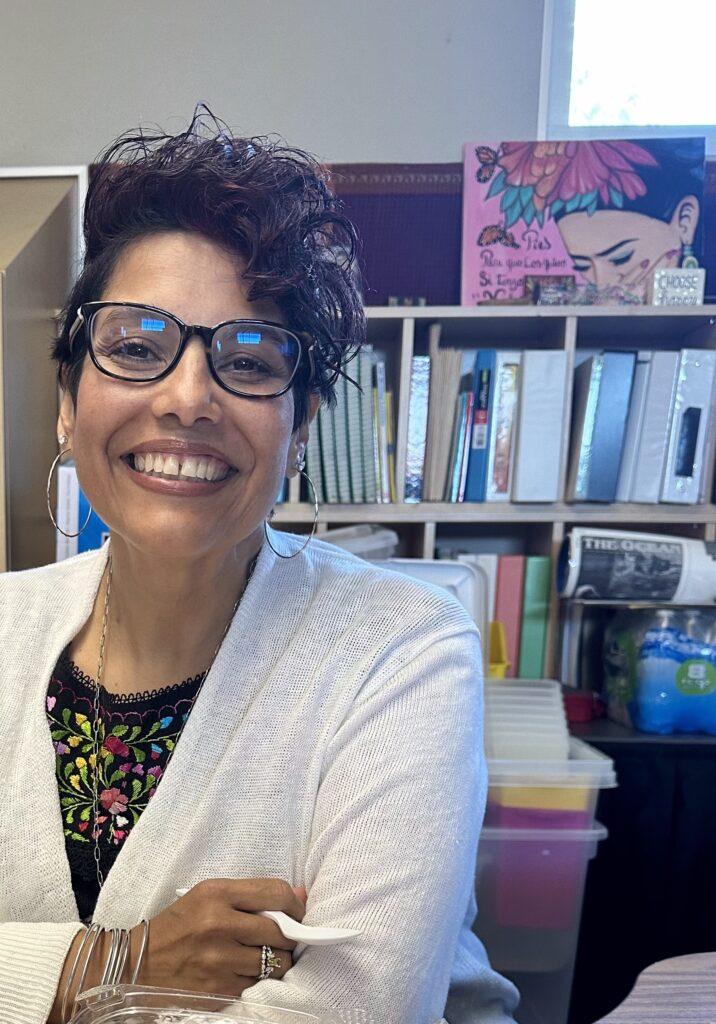
She also observes that English remains a predominantly White and Eurocentric discipline, which reminded me of my own introduction to PUENTE. I remember two of the leading English professors I encountered were White men, excellent professors who cared deeply about developing a culturally centered curriculum for the Latine community; yet their ability to teach from lived experiences has a limit. We do need culturally responsive educators and allies; we also need greater representation.
Maria sees the difference in her own children. Their K–12 teachers have all been Mexican, something she attributes in part to intentionally choosing a Dual Language Immersion program.
What if we became equally intentional about cultivating future teachers and creating that caminito?
School districts, community colleges, universities, and nonprofits can form regional coalitions that reach students in middle and high school. Dual enrollment, EOPS, honors programs, HSI organizations, PUENTE, youth development programs, and community nonprofits can all become entry points along the pathway. District human resources can be invited to explore creative ways to promote new positions and attract diverse candidates to the hiring pools. No school should have a board with photographs of amazing educators where none of the names and faces represent Latino or Black credentialed teachers. It is simply not acceptable in 2026.
There is another part of this caminito we must address—investment. Too often, minoritized professionals are asked to mentor, advise, and share their cultural and professional expertise for free. Giving back is admirable, but we should ask, do we value that expertise enough to invest in it?

We should call on our CSU Chancellor Dr. Mildred Garcia and California Community Colleges Chancellor Dr. Sonya Christien to help ring the alarm and invest in this pipeline—by providing stipends for Latino, Latina, and other underrepresented credentialed mentors, as well as for aspiring teachers who often balance school, work, and family responsibilities while completing their credentials.
Imagine the return on that investment—students supported along the caminito by educators who understand the journey, from exploring teaching to credentialing to hiring, to living those critical first years in the classroom.
One educator we invest in today can go on to teach, mentor, and inspire hundreds—perhaps thousands—of students throughout their career. In thinking about economic mobility and generational wealth, these teachers can one day become principals and administrators, and even college professors and chancellors.
If we want to strengthen the pipeline, we must invest in the people carrying it forward.