
Tips for Upward Mobility in Our Communities
By Melanie Slone
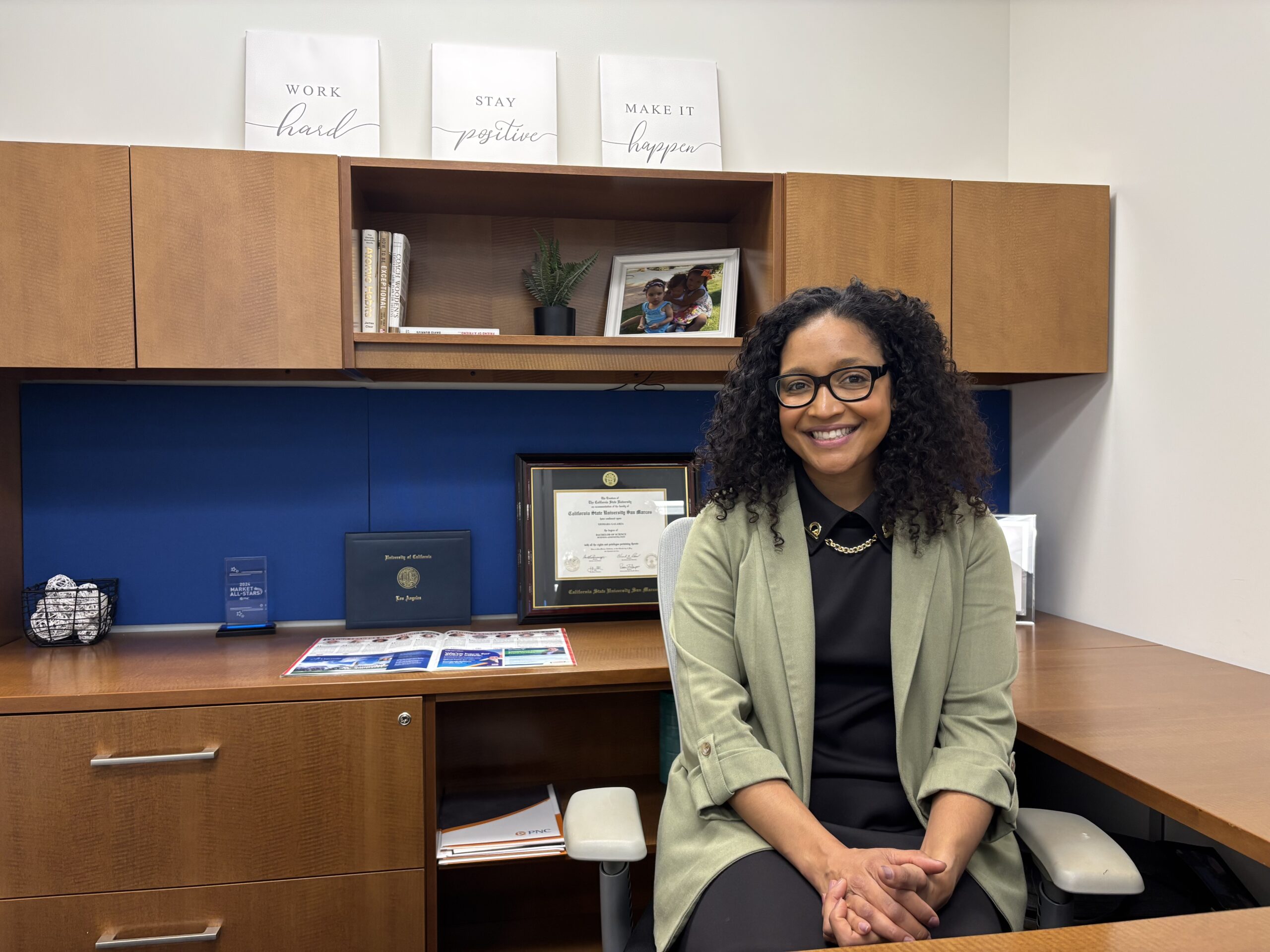
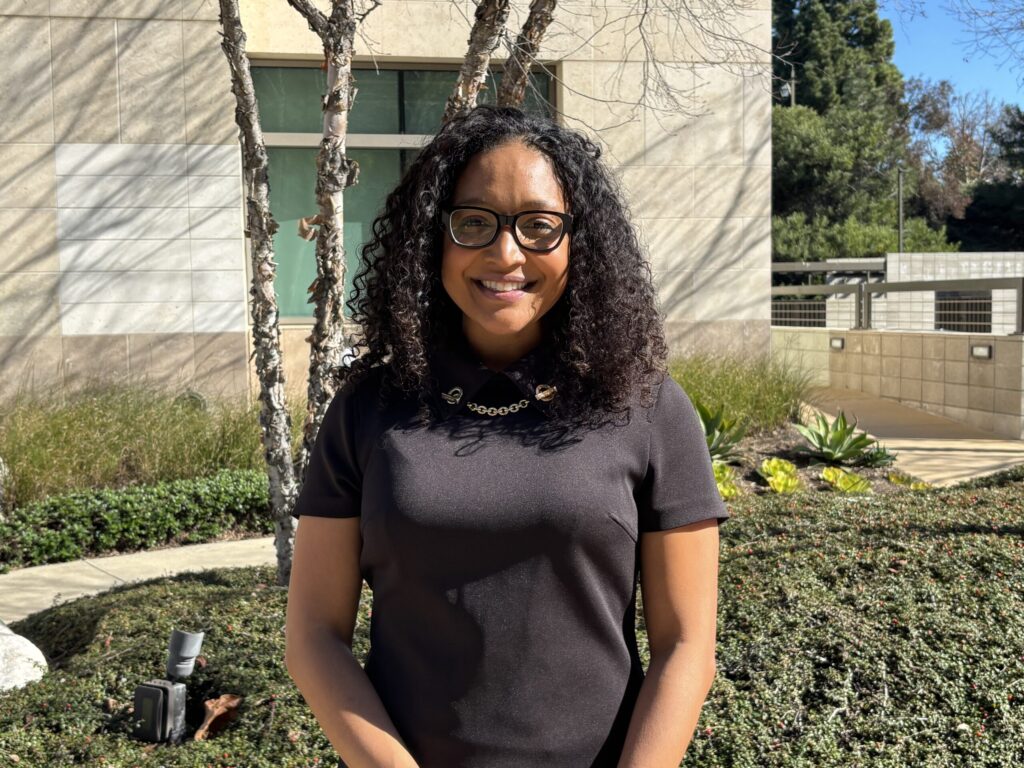
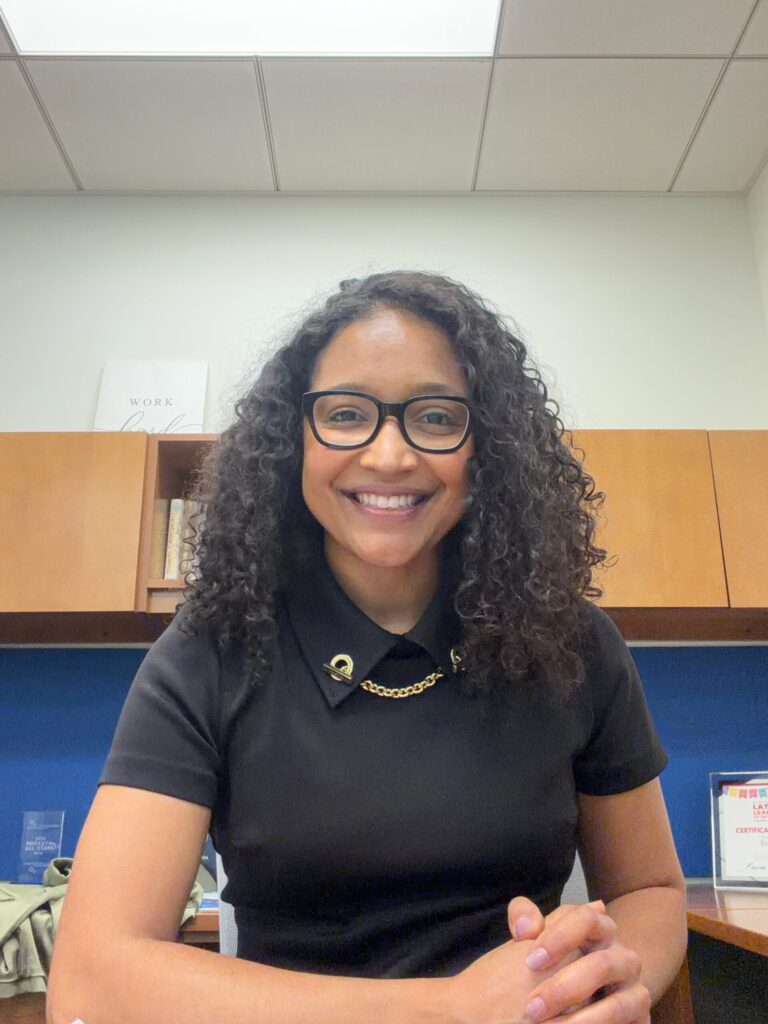
“We all hear the stories of people that make millions of dollars, and it disappears,” says Xiomara Arroyo. “It’s not about how much money you make; it’s about how much money you keep.”
Money was a big deal in her household, says Xiomara, a senior vice president at PNC Bank and leader for the Organizational Financial Wellness team. “We talked a lot about it because there wasn’t a lot of it.”
Her parents worked hard and saved. In fact, her father, an immigrant from Mexico with a sixth-grade education, saved enough to buy five homes and retire at 50.
“I knew quickly on that I wanted to be stable with finances because I wanted to travel, I wanted to live a good life. I didn’t want to be struggling,” says Xiomara.
She visited a Wells Fargo branch near her home at 18 years old and told them she wanted to work there; she has been in the financial sector ever since.
Education Opens Doors
My parents “came from very large, very economically challenged families, so they had a lot of children to feed and not a lot of money to do so,” says Xiomara, whose father is of Mexican descent, and mother, African American. “They also had a lot of work ethic, overcoming their own challenges.”
Born in Los Angeles, Xiomara moved to San Bernardino at two and Fallbrook when she was nine. “I quickly started feeling the sense of, I don’t belong,” she says. “I was the only one with curly hair, biracial, mixed. Everyone was either all-in Latina or all-in African American, so I didn’t really fit into either group.”
She decided to focus on her education. “I found myself drawn to programs that were empowering kids to go to college.” Her father told her education was going to open doors for her. “That was ingrained in my mind every day.”
She took part in the AVID program, which she says changed her life, helping her become the first in her family to be accepted into college. She remembers her time as a student as the “best experience. Cal State San Marcos professors are very local, very big on connecting you to the leaders in the community.”
Financial Empowerment
Xiomara spent 17 years with Wells Fargo, holding different positions. “I’ve always loved helping people with their finances, their goals.”
At an MBA program at UCLA Anderson, she was assigned a career coach who “helped me unpack: what is it that you want to do? How do you want to live? We made a plan.”
Xiomara focused on financial wellness and being there for her community. When PNC Bank decided to grow its financial wellness program in the West, Xiomara let it be known that she wanted the job. “I think the main thing is my network of trusted people,” she says. PNC hired her in September 2021.
She is proud to represent PNC Bank locally. “When businesses are succeeding in this community, we all feel it,” she says.
“My role at PNC is to empower companies to help their employees with greater financial resources,” helping them participate in their 401ks, find resources to pay off student debt, and share their goals and dreams. “My team will put a plan in place to help them reach those goals.”
She makes sure people know about programs that can help them, like a down payment assistance program based on the census track where people live. “There are funds available where you live and where you want to live. You just have to know about it.”
Xiomara urges families to talk about finance with the next generation. “Just like eating healthy is a family decision, finance is the same. Children should be taught the importance of saving a penny, the importance of how much things cost.”
As adults, they’ll know how to “find the root of the problem in their finances,” she says. She encourages everyone to start simple, maybe shaving $1000 off debt over one year or saving that much. “Just sitting down with a professional and having a conversation. What’s the first step I can take? I’m not ready to buy a house, but I really want to. I want to change my financial picture so that we can start growing wealth. Go meet with the professional, with trusted sources.”
She encourages people to be disciplined. “There’s no such thing as bad credit,” she says. “We don’t have to label ourselves, to shame ourselves. …I’ve seen people move credit scores from 400 to 700 just with action and rigor and paying off things.”
Xiomara has partnered with NAACP, holding conversations with middle-school students about careers, finances, and the future.
She also volunteers building homes with Habitat for Humanity and with local afterschool programs, sharing nuggets about higher education and financial empowerment, and serves on several nonprofit boards, where she can give back to the community.
Cultural Foundations
Xiomara’s father wouldn’t allow his children to speak English at home. “He wanted us to learn the language and practice it,” she says. “When I got my first job at Wells Fargo, they paid me about $2.00 more an hour because I spoke Spanish, so it made a significant difference.”
She says many of her customers didn’t trust banks. “They had their money under their mattress, literally…To be able to build trust with them in a language that I was taught by my parents, it made a significant difference,” she says. “Now, I speak to my children in Spanish.”
San Diego County is a melting pot, she says. But in the Latino and African American communities, “I see a lot of challenges in awareness of opportunities or even being selected for roles or careers or knowing about careers or roles.”
She also sees a lack of homeownership. “It comes back to access to information, funds, how families are making decisions at a young age. Who are they trusting for that information?”
She encourages families to talk about finances in a daily setting, including interest rates, credit cards, and properties, and to widen their circles and make others aware of their goals. “Don’t stay in your affinity groups; you feel comfortable and that’s good, but that’s not helpful for our generational upward mobility. We have to mix; otherwise, it’s going to be the same groups.”
Tips for Others
Xiomara tells others to make a list of people that could be considered their “personal board of directors, people who are advocates, champions, and sounding boards for them across different industries, different community groups.”
Networking is also essential. Young people can find someone who is working in their dream job and reach out to that person, maybe online. “That’s the start of building your network,” she says.
Get involved in things you’re passionate about. “It’s going to open the doors to careers that align with that.” You can volunteer or go to Chamber of Commerce events, not only asking for something but also giving your time and sharing your ideas.
“If you don’t share your dreams, then they’re just being quieted,” she says. “The only reason I am where I am today is that I’ve shared my dreams and I’ve kept in touch with people that I feel cared about me. I’ve also cared about their dream.”
Xiomara warns, “We need to be able to get that self-critic out of our mind. Stay positive. Sometimes people go through hard times, and they don’t know how they’re going to get to that dream because they can’t even put food on the table.”
She says to focus on your mindset. “What we say to ourselves really matters. It’s that mindset that’s going to make the difference,” says Xiomara Arroyo.